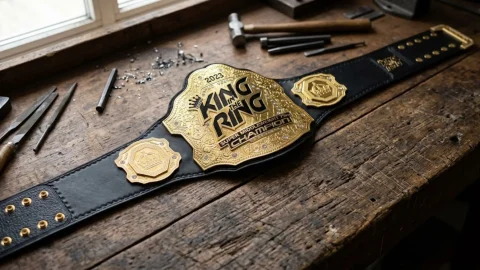

Ask ten boxing fans which belt matters most and you’ll get ten different answers. Honestly, that’s the whole problem. Unlike most sports, boxing doesn’t have one governing body handing out one championship per weight class. It has four: the WBC, WBA, IBF, and WBO, plus a fifth “unofficial” title that a lot of purists actually respect the most. If you’re trying to get boxing belts explained in plain terms, or figure out how they actually stack up, you need to know where each one came from and why.
Quick answer: if you’re asking which boxing belt is the single most prestigious, the consensus among fighters and fans is the WBC, the green belt, the one most closely tied to the sport’s biggest superfights. But “most prestigious” isn’t the same as “most legitimate,” and once you look at the full history, plus the lineal championship that exists outside all four organizations, the real order of prestige gets more interesting.
Here’s boxing belts ranked by prestige, in order, and the real reasons behind each spot.
WBC — The Consensus #1 (The Green Belt Standard)
The World Boxing Council was formed in Mexico City on February 14, 1963, a year after the WBA, and it’s widely regarded as the belt every fighter actually wants. Not because it’s the oldest (it isn’t) or the most active (it isn’t that either), but because of what it’s been attached to: Ali, Frazier, Leonard, Chávez, Mayweather. The WBC has spent six decades being the belt in the room for boxing’s biggest nights.
A good concrete example of how the WBC protects its own prestige: in 2009 it introduced the “Diamond Belt,” a one-off title reserved for genuinely historic superfights rather than routine defenses. The first person to ever hold it was Manny Pacquiao, after his win over Miguel Cotto, a belt created specifically to sit above the normal championship, which tells you a lot about how the WBC thinks about its own hierarchy.
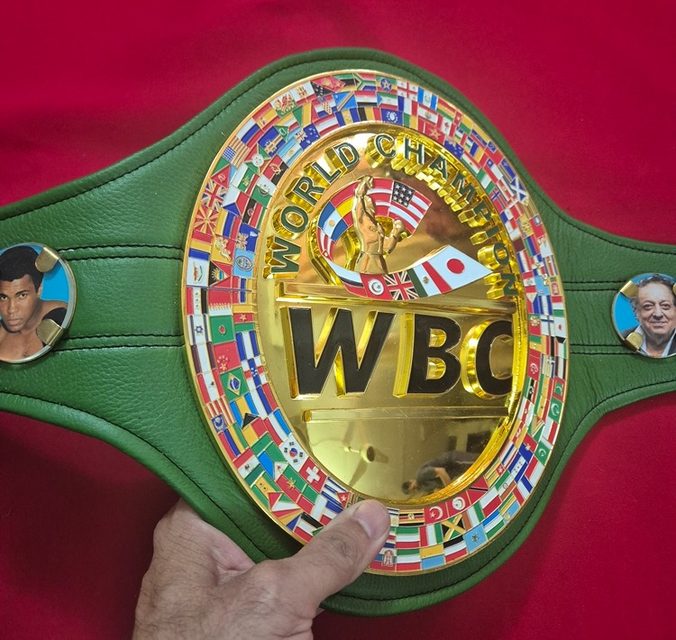
If you want to see what this belt looks like in person rather than on a fighter’s shoulder in a highlight reel, our replica championship belts are built to the same scale and detail as the real thing, right down to the plate engraving.
2. WBA — The Oldest Title, But Lowest Trust
The WBA is the oldest of the four by a wide margin. It started in 1921 as the National Boxing Association in the US, then became the WBA in 1962 when it expanded internationally and relocated to Panama. On paper, that history should make it the most respected belt in the sport. In practice, it’s the one fans trust the least, and there’s a specific, well-documented reason why.
For years, the WBA didn’t just recognize one champion per weight class. It recognized a “regular” champion and a “super” champion at the same time, sometimes with an “interim” champion layered on top of both. At one point, a single weight class could have three different men all holding a “WBA world title” simultaneously.
Fans and boxing writers called it out constantly, and the criticism landed: in 2021, the WBA formally began a title-reduction plan, eliminating interim titles and working to consolidate the regular/super split division by division. That cleanup is still ongoing.
If you’re building a wall display and want a piece that represents boxing’s longest-running sanctioning body, flaws and all, our WBA Close Crown replica is made to the same standard as our other championship builds.
[IMAGE: WBA-style belt]
3. IBF — Strict Rules, Lower Spotlight
The International Boxing Federation has the messiest origin story of the four, and the most interesting one. It traces back to 1976 as the United States Boxing Association, then went international in 1983, led by Robert Lee, who had just lost a bid to become WBA president the year before. In other words: the IBF exists partly because someone didn’t get the job he wanted at a rival organization.
Despite that scrappy start, the IBF built a reputation as the most disciplined of the four when it comes to mandatory title defenses and ranking integrity. One boxing outlet put it bluntly, noting that of the four bodies, only the IBF seems to keep it simple. No regular/super split, no Diamond-style bonus belts, no Gold or Global secondary titles. Just one champion per division. It doesn’t have the WBC’s spotlight or the WBA’s history, but among people who follow the sport closely, it’s often seen as the “clean” belt of the group.
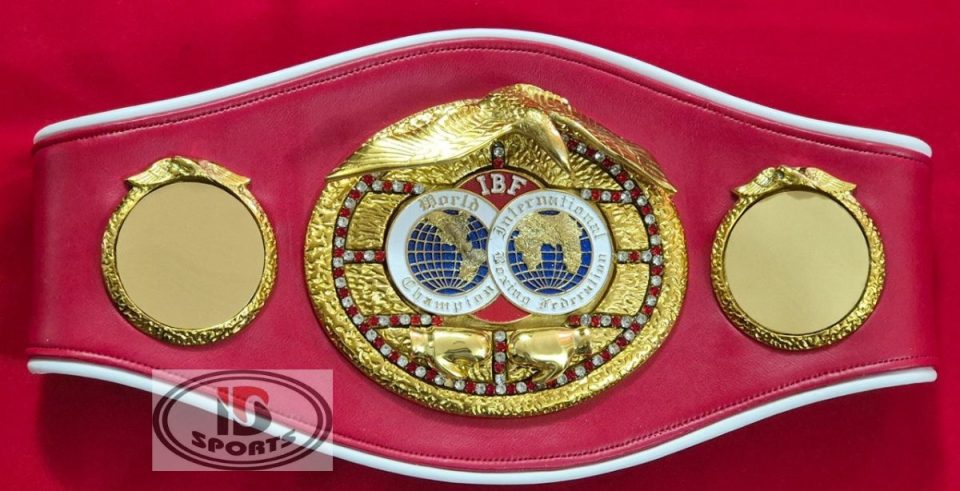
We build the IBF championship belt replica with the same red-strap detailing fighters wear on fight night.
4. WBO — The Belt Born Out of a Scandal
The World Boxing Organization is the youngest of the four, founded in San Juan, Puerto Rico, in 1988, and it exists because of a specific blow-up at a WBA meeting. At the WBA’s annual convention in Isla Margarita, Venezuela, a group of Puerto Rican and Dominican businessmen got fed up with what they saw as the WBA’s questionable ratings and rulemaking, and walked out to start their own organization.
That origin made the WBO the outsider for years. American networks and promoters were slow to treat a WBO title as equal to the other three, and it took a long stretch, plus a lot of big-name fighters eventually unifying WBO belts with the others, before it was accepted as a genuine member of boxing’s “Big Four.” Today it’s fully there, but it’s worth knowing it had to earn that seat rather than being handed it.
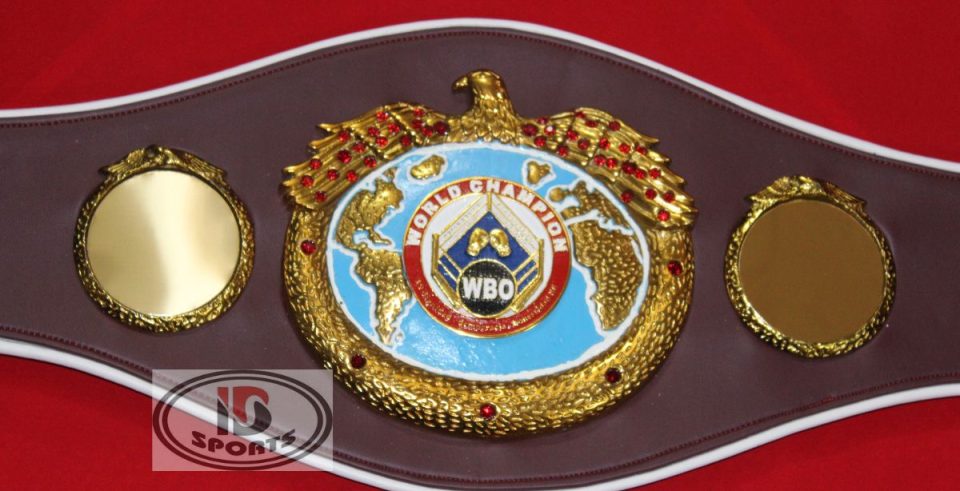
Our WBO championship belt replica is one of our most requested builds, probably because the WBO’s design has always leaned a little sharper than the others.
Where Does the Lineal / Ring Magazine Championship Fit?
Quick answer: many boxing purists rank the lineal championship above all four sanctioning-body belts, because it’s the only title that isn’t controlled by an organization at all.
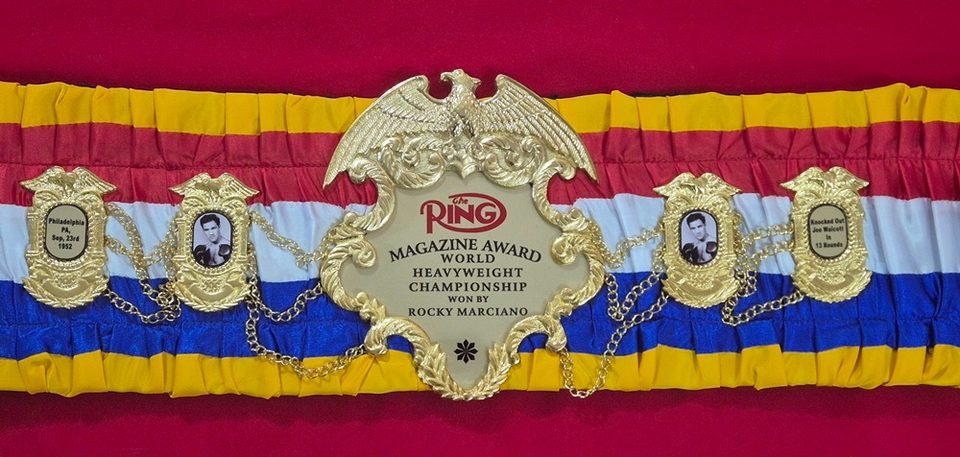
The lineal championship is commonly summed up in five words: “the man who beat the man.” It’s not awarded by a committee or tied to sanctioning fees. It just passes from one fighter to the next through actual combat, in an unbroken line. The Ring magazine runs its own closely related championship policy on top of that lineage, naming whoever it considers the clear #1 fighter in a division, specifically to cut through the confusion of four competing “world champions” existing at once.
It’s not a perfect system (vacancies can get messy, and there’s no formal body enforcing it), but it exists for one reason: because fans got tired of the alphabet soup and wanted one answer to “who’s actually the champion.” A sharp, recent illustration of that sentiment: after the WBC stripped Terence Crawford of his title over unpaid sanctioning fees, Crawford didn’t hold back. He called the WBC belt “a trophy” and said the real belt is the Ring belt, “which is free.”
Why Boxing Ended Up With “Alphabet Soup” — And Why It’s a Real Problem
Here’s the honest take: the criticism is fair. Boxing has four belts instead of one because it’s profitable to have four belts instead of one. Every sanctioning body charges a fighter a fee, typically around 3% of their purse, to sanction a title fight. That’s real money. Former unified champion Errol Spence Jr. put it plainly when he asked publicly where all that money was actually going, after paying three percent to four different organizations for the right to be called undisputed champion.
The Crawford situation makes the point even harder to ignore. The WBC stripped him of his super middleweight title for not paying roughly $300,000 in sanctioning fees, reduced down from the standard 3% because of how large his purse was. Crawford’s response was blunt: he asked what made the WBC any better than the other three bodies he’d already paid without issue.
That’s the alphabet-soup problem in one exchange. Four organizations, four fees, four separate claims to “world champion,” and fighters increasingly willing to say out loud they’re not sure what they’re paying for.
What a Belt Actually Means, Beyond the Rankings
Rankings and history aside, the belt itself means something different depending on who’s asking for it. We’ve had veteran boxers, men who fought professionally decades ago, come to us wanting a replica made with their own name engraved on the plate. Not a fighter they admired. Themselves. A record of a career that maybe never got the recognition it deserved the first time around.
That’s the part the WBC-vs-WBA-vs-IBF-vs-WBO debate misses. The politics behind the alphabet soup are worth being skeptical of. But the belt itself, the thing on the wall, the nameplate, the weight of it in your hands, represents something that has nothing to do with sanctioning fees.
What is the most prestigious boxing belt?
The WBC is widely regarded by fighters and fans as the most prestigious and visually iconic belt in boxing, though the lineal/Ring championship is often ranked above it by purists specifically because it isn’t tied to any organization.
Why does boxing have so many different world titles?
Mostly politics and money. Each of the four major sanctioning bodies charges fighters a fee, typically around 3% of their purse, to sanction a title fight, which creates a direct financial incentive for more organizations, and more belts, to exist.
What is a lineal or “Ring Magazine” championship?
The lineal title follows a strict “the man who beat the man” lineage, passed only through an actual fight, independent of any sanctioning body. The Ring magazine runs a closely related championship policy of its own, naming whoever it considers the clear #1 fighter in a division.
What does “undisputed champion” mean?
A boxer who simultaneously holds all four major world titles, WBC, WBA, IBF, and WBO, in the same weight class at the same time.
Is the WBO considered a real world title?
Yes. It took years of being treated as the “fourth” belt before it was fully accepted, but today the WBO is firmly established as one of boxing’s “Big Four” sanctioning bodies.