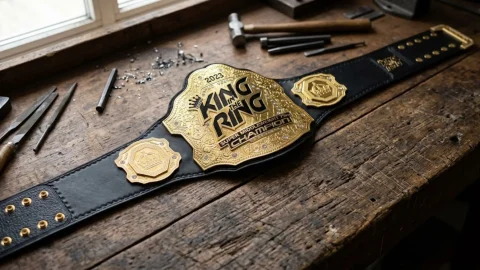


Ask a kickboxing coach about belts and he’ll tell you about white, yellow and black. Ask a promoter and he’ll tell you about GLORY, K-1 and the strap he needs finished before fight night. Same word, two different objects.
Most guides pick one and ignore the other. That leaves the real question unanswered: what comes after black belt, and which title at the top is worth the most?
We build title belts for a living, so we see the top half of that ladder every week. This post lays out every level in order, from the first grading belt to a world title, then ranks the kickboxing championship belts by how much they actually mean.
Table of Contents
What Are the Kickboxing Belt Levels in Order?
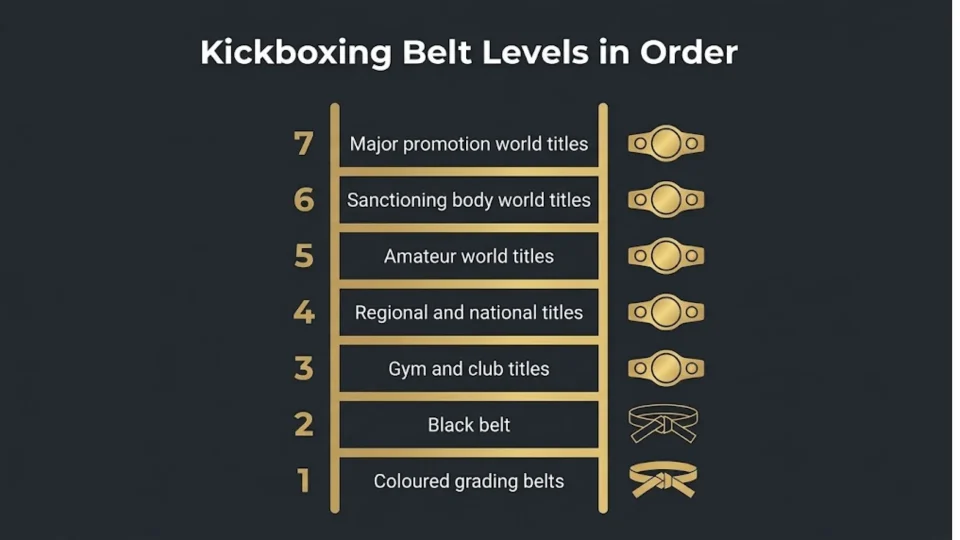
Kickboxing belt levels run in two stages. First come the coloured grading belts, usually white through black. Above black belt, the only belts left to earn are title belts: gym, national, amateur world and professional world championships.
Put the kickboxing belts in order on one ladder and it looks like this:
- Coloured grading belts (white up to brown)
- Black belt and its dan grades
- Gym and club titles
- Regional and national titles
- Amateur world titles
- Sanctioning body world titles
- Major promotion world titles
The first two rungs are tied around your waist and earned in a grading. The other five are kickboxing championship belts, made of leather and metal, and you only get one by beating somebody.
Kickboxing Grading Belts in Order: The Quick Version
Most schools that grade use eight colours. Here they are in the usual sequence.
| Order | Belt | Stage |
|---|---|---|
| 1 | White | Day one, no test |
| 2 | Yellow | First grading, basic strikes and stance |
| 3 | Orange | Clean basics under light pressure |
| 4 | Green | Combinations and defence |
| 5 | Blue | Controlled sparring |
| 6 | Purple | Sparring with intent |
| 7 | Brown | Final step before black |
| 8 | Black | Dan grades continue from here |
Treat this as the common pattern, not a rulebook. No single body sets the order for the whole sport. One of the few places grading and title sanctioning meet is the World Kickboxing Association, which certifies coloured belts and kickboxing black belts from 1st to 9th dan.
Why Your Gym’s Belt Order Looks Different
Kickboxing is several sports sharing one name, and each handles rank its own way.
- American style: grew out of full contact karate, so it kept karate’s coloured belts. This is where the table above comes from.
- Dutch style: most fight gyms don’t grade at all. You are a beginner, a B class fighter or an A class fighter, and your record decides which.
- Japanese K-1 style: built around tournaments and promotion titles, not a syllabus.
- Muay Thai: traditionally has no belts. Some Western gyms hand out coloured armbands to give students a ladder to climb.
- Savate: ranks fighters by glove colour instead of a belt.
So if your gym adds a red belt, skips purple or uses stripes, nothing is wrong. Your instructor chose a system, which is why two gyms can list their kickboxing belts in order and not match.
The Belt Levels Above Black Belt: How the Title Ladder Works
A black belt says you know the syllabus. Every level above it says you won a fight that had something riding on it. Here are the four rungs of kickboxing championship belts, lowest to highest.
Gym and Club Titles
This is where most fighters win their first strap. A gym runs an in house fight night or an interclub show and puts a belt on the main bouts. Nobody outside the room recognises the title, and it doesn’t matter. For a fighter with three bouts, it is the first proof that the training counts.
Regional and National Titles
One step up, the belt belongs to a promotion or a national federation instead of a single gym. Now there is a ranking behind it, challengers from other camps, and usually a defence clause. A national title is also the rung where matchmakers at bigger shows start paying attention.
Amateur World Titles
Amateur kickboxing has one recognised governing body: WAKO, the World Association of Kickboxing Organizations. The International Olympic Committee gave it full recognition on 20 July 2021. WAKO holds its world championships every two years, and only national teams can enter.
The reward at this level is a gold medal, not a belt. That alone tells you which side of the sport you are on. Amateur kickboxing runs like an Olympic sport. Professional kickboxing runs like prizefighting, and prizefighting hands out belts.
Professional World Titles
The top rung splits in two.
- Sanctioning bodies such as ISKA, the WKA and WKN don’t run a roster. They approve title fights on other people’s shows and supply the belt.
- Promotions such as GLORY, ONE Championship and K-1 sign the fighters, run the events and crown their own champions.
That split is the reason the kickboxing belts ranking is argued about so much. A promotion title is only as strong as its roster. A sanctioning body title is only as strong as the two fighters in the ring that night.

Kickboxing Championship Belts Ranked by Prestige
We have already covered how boxing’s major belts rank. Kickboxing championship belts are harder to sort, because there is no fixed set of four. This is our order, with the reasoning, as things stand in October 2026.
One warning first: prestige changes with weight class. At heavyweight and light heavyweight, GLORY is the answer. At the lighter weights, ONE, K-1 and RISE hold as much talent or more.
1. GLORY
GLORY has been the home of the big men since it launched in 2012. Rico Verhoeven held its heavyweight title for more than a decade and defended it a record 13 times before vacating on 20 November 2025.
What happened next is why it still tops the list. GLORY didn’t hand the belt to anyone. It ran tournaments. Mory Kromah won the heavyweight title in the Last Heavyweight Standing final on 7 February 2026. Mohamed Touchassie won the light heavyweight title by getting through an eight man bracket in one night on 13 June. A belt you can only win through a bracket carries weight.
2. ONE Championship
ONE has the deepest lighter divisions in the sport and the biggest stage in Asia. Its champions list reads like a pound for pound ranking: Superbon at featherweight, Regian Eersel at lightweight, Jonathan Haggerty at bantamweight and Superlek at flyweight.
It sits second for one reason. ONE runs kickboxing next to Muay Thai, MMA and grappling, so the kickboxing titles share the spotlight. GLORY does one thing only.
3. K-1
K-1 is the name that made the sport famous. Its World Grand Prix started in 1993, and for years winning it was the closest thing kickboxing had to an undisputed title.
The modern K-1 is rebuilding that reach. Its 2026 calendar runs 90kg qualifiers in Melbourne, Milan and Paris, with the 70kg World MAX final set for 29 December in Yokohama. In February, Germany’s Lukas Achterberg entered the 90kg tournament as a reserve and won it with three first round finishes. The history is first class. The current roster isn’t yet as deep as the two above it.
4. RISE
RISE is the most underrated belt on this list outside Japan. Its lighter divisions are full of fast, technical fighters, and the big promotions know it. In 2026 GLORY ran an eight man featherweight tournament jointly with RISE, with the final in Tokyo on 6 June.
When the number one promotion shares a bracket with you, your titles mean something.
5. WAKO World Championships
WAKO ranks fifth on fame and first on legitimacy. It is the only body on this list recognised by the International Olympic Committee, and you cannot buy your way into its world championships. You qualify through your national team.
The ceiling is that it is amateur. Winning it proves you are among the best unpaid fighters alive, and the professional titles above it are where the sport’s biggest names end up.
6. ISKA, WKA and WKN
These are the sanctioning bodies, and their history is huge. The WKA’s first sanctioned event was in Los Angeles on 12 March 1977, featuring Benny Urquidez. WKN began in 1994 as an offshoot of ISKA before the two split in 1998.
They rank last here because their belts travel. The same title can headline a packed arena one year and a small hall the next. Judge each one by the fight it was won in.
Does a “World Champion” Kickboxing Belt Always Mean the Best in the World?
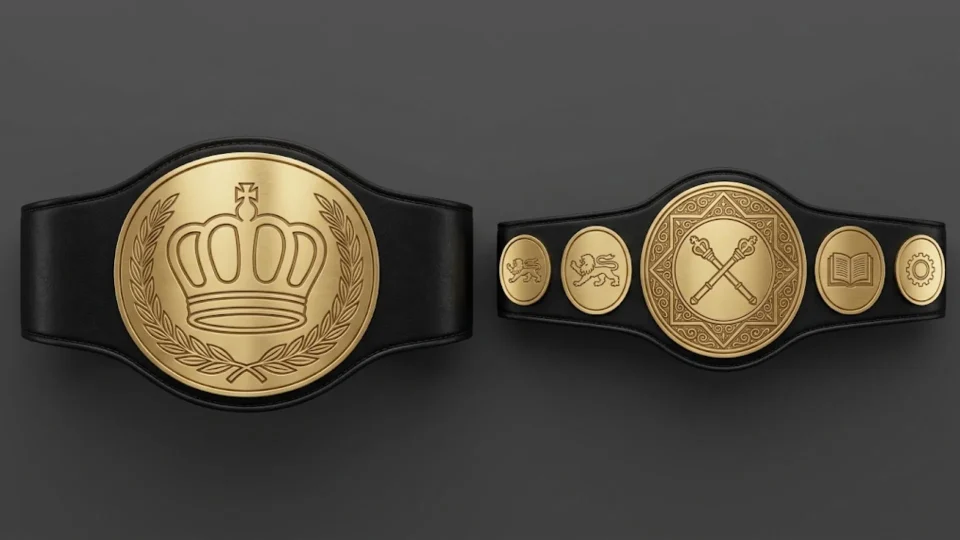
No. Any promotion or sanctioning body can call its title a world championship. A belt is worth what its challengers are worth, so the name on the plate matters less than who was beaten to win it.
Here is the take most belt guides avoid. Wikipedia’s running list of current kickboxing world champions includes more than 20 organisations, from GLORY and ONE down to regional shows in a single country. Every one of them calls its champion a world champion.
That doesn’t make smaller kickboxing championship belts worthless. A fighter who wins a regional promotion’s title has still won a real fight for a real prize. It only means the word “world” on a plate is marketing until the fights back it up.
Three Checks for Any Kickboxing Title
- Who was in the fight? Look up both fighters. If neither appears in an independent ranking, it was a title fight in name only.
- How often is it defended? A belt defended twice a year against contenders means more than one that sits vacant or gets defended once and forgotten.
- What do independent rankings say? Outlets such as Beyond Kickboxing and Combat Press rank fighters across promotions. If the champion sits in their top ten, the belt is real.
Run those checks and the kickboxing belts ranking sorts itself out. You stop asking which logo is biggest and start asking who had to be beaten.
What Makes a Great Kickboxing Title Belt: A Maker’s View
Rankings tell you what kickboxing championship belts mean. They don’t tell you whether one is well made. From the bench, those are separate questions, and the second one has clearer answers.
Centre Plate Shape and Readability From a Distance
A title belt gets judged from 30 metres away and through a phone camera. So the first test is simple: can you tell whose belt it is from the back row?
ONE Championship’s current belt passes that test better than most. When it was unveiled in March 2022, the design put one oversized logo under a crown in the middle of the plate. The promotion also says it weighs 26.4 pounds, which it calls the heaviest in the business. The weight makes headlines, but the single bold shape is the smarter decision. You can read it in a thumbnail.
The common mistake runs the other way. A plate crammed with small lettering, flags and borders looks rich in a close up photo and turns to gold noise from ten rows back. If a client sends us artwork like that, the first thing we suggest is cutting the wording by half.
Side Plates, Weight Classes and Strap Colour
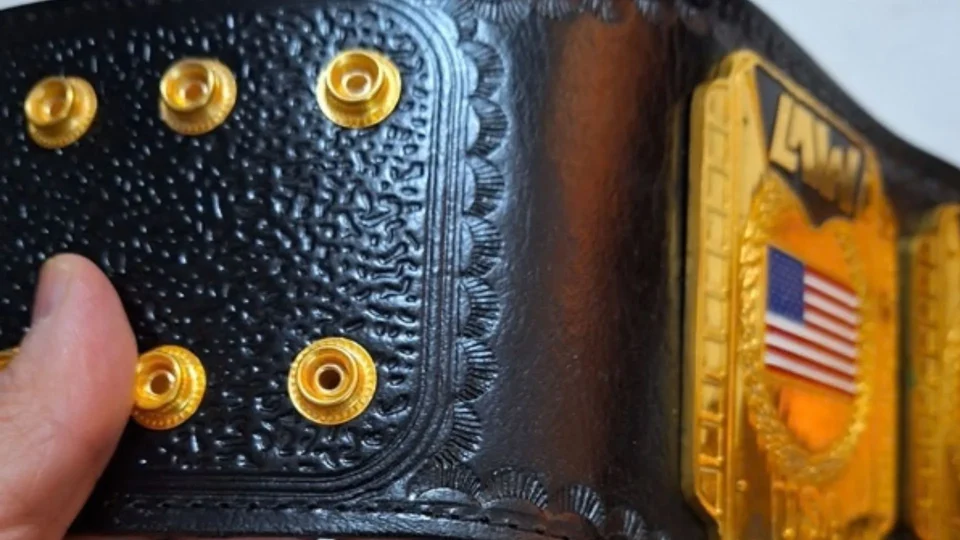
The centre plate carries the identity. The side plates carry the detail: weight class, year, the promotion’s city or flag. Keeping that split clean is what makes a set of belts look like one family.
It matters most for promotions with several divisions. Use the same centre plate on every belt and change only the side plates, and the crowd reads them as one championship at five weights. Change everything on every belt, and you have five unrelated trophies.
Strap colour is the cheapest way to add meaning. Black is the default. A promotion that gives its top title a different strap from the rest has told the audience which belt matters most before anyone reads a word.
How Promoters Set Up Title Belts for a Kickboxing Event
The third and fourth rungs of the ladder, gym titles and regional titles, are the ones we build most. Our kickboxing championship belts have gone to gyms and promotions in Australia, New Zealand, the UK, the USA and France. The orders have a pattern, and so do the mistakes.
How Many Belts a Fight Night Needs
One belt per title, not one per bout. A first show usually needs two to four: a main event title and one or two supporting divisions. A tournament needs one per weight bracket.
Three things make a small set look like a serious championship:
- Fix the weight classes first. Decide the divisions before the design, because the side plates depend on them.
- Keep one centre plate across the set. It is the family look described above, and it also keeps the cost per belt down.
- Leave the winner’s name off. The belt is made before the fight. Put the division and the event on the plates, and add the champion’s name afterwards if you want it.
Budget decides the rest. We have broken down what each price point actually buys in a separate guide, so you can match plate options to the number of belts you need.
When to Order: The Mistake of Leaving It Late
The most common order we get from promotions is a bulk one with the tournament already close. The poster is out, the fighters are matched, and the belts are the last thing on the list.
It can be done, but it squeezes the one step that shouldn’t be rushed: approving the artwork. A belt is cut and plated from the design you sign off. A logo that is slightly wrong at that stage is wrong on every belt in the batch.
So order when the card is planned, not when it is announced. If you have never commissioned one before, read how a custom order runs from sketch to shipping first. It shows what we need from you and in what order.
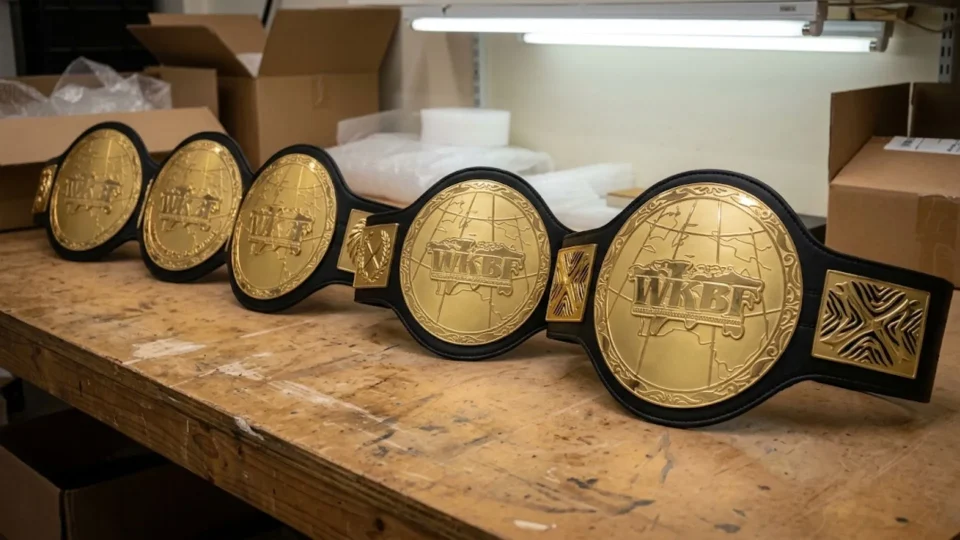
When your divisions and logo are ready, start a custom order for your kickboxing championship belts and tell us your event date in the first message.
Kickboxing Belts FAQ
What Comes After Black Belt in Kickboxing?
Dan grades come first. The WKA, for example, certifies kickboxing black belts from 1st to 9th dan. After that, the only belts left are kickboxing championship belts: gym, national, amateur world and professional world championships, in that order.
Who Is the Kickboxing World Champion Right Now?
There isn’t one. Each major promotion has its own. As of October 2026, the heavyweight champions are Mory Kromah at GLORY, Roman Kryklia at ONE Championship and Ariel Machado at K-1.
Do GLORY and ONE Fighters Have Black Belts?
Some do, most don’t need one. Fighters who came up through karate or taekwondo often hold a black belt in that art. Fighters from Dutch kickboxing or Thai gyms usually never graded at all. Promotions sign fighters on their records, not their rank.
Is Kickboxing an Olympic Sport?
It is recognised but not yet on the programme. The IOC gave WAKO full recognition in 2021. Kickboxing was shortlisted for the Los Angeles 2028 Games and wasn’t selected, so it has still never appeared at an Olympics.
Can a Gym Create Its Own Kickboxing Championship Belt?
Yes. No licence or sanctioning body is needed for an in house title. A gym or promoter picks the divisions, commissions the belt and decides the rules for defending it. That is how most kickboxing championship belts in the world come to exist.