
People use one name for several different belts. I make wrestling title belts in Sialkot, Pakistan, so I judge a belt by its plates, strap, and metal before I read the nameplate. This guide sorts every Big Gold Belt version by how it was built, so you can tell them apart and know what you’re buying.
Key Takeaways
- A Reno silversmith, Charles Crumrine, built the original in 1985. It debuted on February 14, 1986.
- Five builds share the name: the original, the 1999 to 2000 cast copies, WWE’s unbranded copy, WWE’s logo version, and modern replicas.
- Podcaster Conrad Thompson likely owns the original. WWE retired the design on August 18, 2014.
- No source confirms what dented the top of the belt.
- I build mine by etching 3 mm or 4 mm brass, or 4 mm zinc.
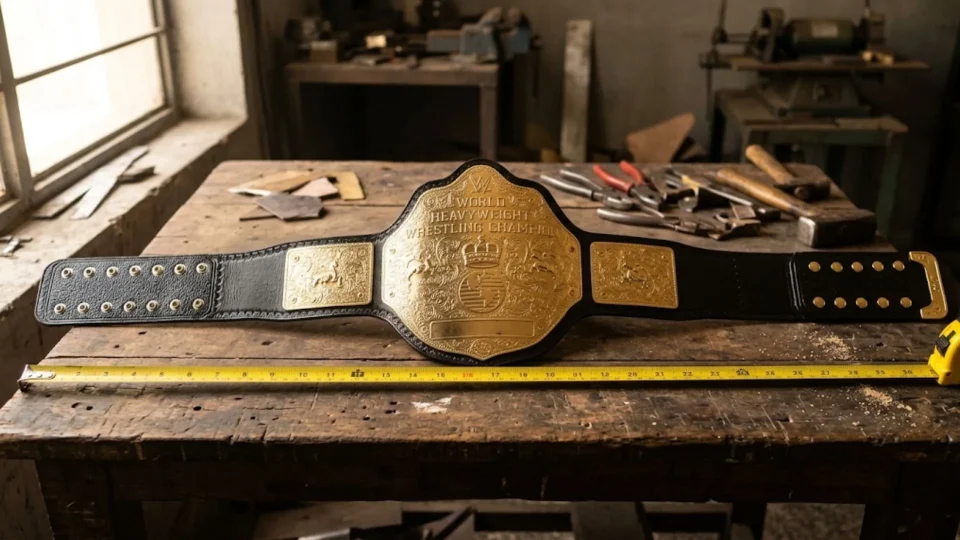
Table of Contents
What Is the Big Gold Belt?
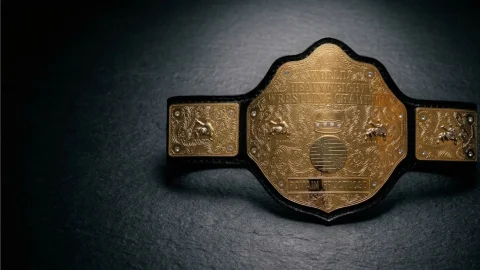
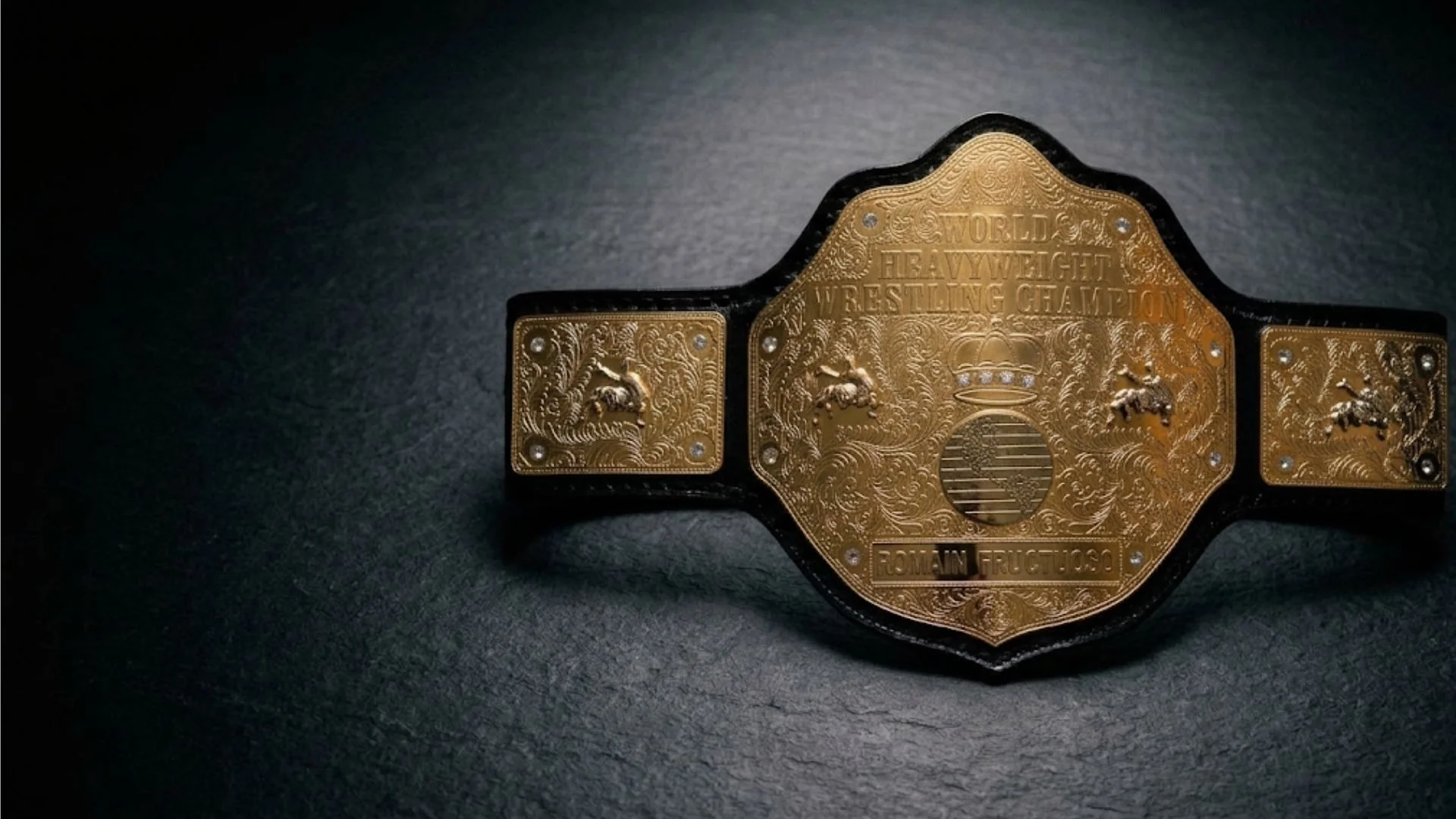
The Big Gold Belt is the gold championship belt made in 1985 for Ric Flair’s NWA World Heavyweight title. It later carried the WCW and WWE world titles until WWE retired it in 2014.
The design has three large plates and a nameplate for the champion’s name. The original carried no company logo. It replaced the older NWA “domed globe” belt, and it debuted on February 14, 1986, at Battle of the Belts II. You can read the basic timeline on Wikipedia’s article on the belt and the NWA World’s Heavyweight Championship page.
Who made the Big Gold Belt?
Charles Crumrine did. He was a silversmith in Reno, Nevada, who made rodeo-style belt buckles. When a seller says “Crumrine” on a belt, they mean a copy of his original design.
Sources tell the order story differently. Wikipedia says Jim Crockett Promotions commissioned the belt. A belt maker’s history post says Nelson Royal, a western store owner, ordered it, and Crockett bought it after he saw it. Three people hand engraved it: Crumrine, Victor Ortiz, and Crumrine’s daughter, Jeanne Lashelle.
How the Original Crumrine Belt Was Built
The original was hand engraved and hand lettered, not cast in a factory. That one fact explains why every replica starts from a copy of the look, not a copy of the object.
| Part | Original detail | How sure we are |
|---|---|---|
| Plates | Three large plates plus a nameplate | Confirmed (Wikipedia) |
| Metal | Silver with gold plating. Sources disagree on sterling versus German silver. | Disputed |
| Two-tone finish | Areas were masked before plating, so silver shows through the gold | One source |
| Engraving | Done by hand by three people. The lettering is hand made, not a font. | Two sources |
| Nameplates | Four ordered: Ric Flair, Stinger, Ronnie Garvin, and Dusty Rhodes. Flair’s first plate read “Rick”. | Two sources |
| Stones | Cubic zirconia and fake rubies | Two sources |
| Strap | Shell cordovan first, then black leather by 1999 | Wikipedia |
| Branding | No company logo | Wikipedia |
Wrestlers reportedly popped stones out of the original to sell them. The settings were later drilled deeper to hold larger stones. One source also says WCW had the plates replated in the late 1990s, which gave the belt a dull orange look.
If you want the basics of how any title belt goes together, my guide to what a boxing title belt is made of covers plates, straps, and stones.
Ric Flair Big Gold Belt: The Version Most People Mean
The name usually points to the belt Flair wore. It’s the original Crumrine build, and every other version in this guide copies it.
Flair wore it at the 1986 debut, where he defended the NWA title against Barry Windham. In July 1991 he left WCW while still champion and kept the belt. WCW vice president Jim Herd had refused to return his $25,000 deposit, which NWA champions paid and got back when they lost the title.
Flair took the belt to the WWF and called himself the real world champion. WCW sued, and he switched to a WWF tag team belt on television for a time. The belt went back to WCW in 1992, and the dispute ended in a settlement.
WCW Big Gold Belt: Cast Copies, Replating, and the 1999 Strap
In WCW the belt first stood for the NWA and WCW world titles. From 1993 to 1994 it represented the WCW International World Heavyweight Championship, until WCW unified it with its own title in June 1994. In 1996, Hollywood Hogan spray-painted an nWo logo on it and kept wearing it that way.
The belt changed most in 1999. WCW swapped the original strap for black leather and made cast copies for use as substitutes. One history says the copies went to Kevin Nash, Diamond Dallas Page, Jeff Jarrett, and Scott Steiner.
Jarrett lost his copy to Hogan at Bash at the Beach 2000, and Hogan kept it. He has called it the original, but that history disputes the claim and says Jarrett lost the real belt to Booker T later that night.
Cast copies matter because they set the look many buyers expect. A copy cast from a finished belt tends to lose sharpness at each step, so edges go soft. An etched plate follows the artwork instead of another plate.
WWE Big Gold Belt: What Changed After 2001
WWF bought WCW in March 2001, and the belt moved over with it. It stood for the WCW title, then for the unified title in December 2001. In April 2002, Triple H received a single Undisputed belt, and WWE brought the Big Gold back for its World Heavyweight Championship that fall.
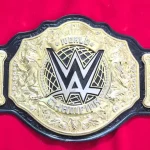
The biggest visible change came in March 2003. WWE introduced a new version with a WWE logo on the center plate, which the original never had. That logo is the fastest way I tell a WWE-era build from a Crumrine-style one.
One source lists the builders of later WWE versions, including J-Mar from 2003 to 2011 and Dave Millican in 2011. I couldn’t confirm those names from a second source, so I treat them as unverified.
If you’re curious how WWE-style plating works, I explain it in are WWE belts real gold.
Big Gold Belt Versions Compared Side by Side
Five builds carry the name, and the plates, the logo, and the maker tell them apart.
| Version | Years | Maker | Logo | How sure we are |
|---|---|---|---|---|
| Original Crumrine | 1985 to about 2000 | Charles Crumrine, hand engraved | None | Confirmed |
| WCW cast copies | 1999 to 2000 | Cast from the original. One source says bronze. | None | Two sources, details differ |
| WWE unbranded copy | 2002 to March 2003 | A cast copy, per one source | None | One source |
| WWE logo version | From March 2003 | Later builders reported as J-Mar and Millican | WWE logo | Logo confirmed, builders single-source |
| Modern etched replica | Today | Replica makers, including us | Unbranded or custom | Our own build |
The original is the only version my sources describe as hand engraved. Every later version copies it, either by casting a finished belt or by working from reference artwork.
How to Tell One Big Gold Version From Another
Six checks sort most belts, and the build tells you more than the label.
- Check the center plate for a logo. The original has none. A WWE-era build carries a WWE logo.
- Look at the strap. The original began on shell cordovan and moved to black leather by 1999.
- Turn the nameplate over. One belt maker’s history says original Crumrine plates carry his logo engraved on the back.
- Study the finish. On the original, silver shows through the gold where the plates were masked. After the late 1990s replating, one source says the belt looked dull orange.
- Read the lettering. The original’s letters were cut by hand, so they vary slightly. A replica’s letters follow artwork and look more uniform.
- Ask how the plates were made. Etched, CNC, or cast, plus the metal and thickness, tells you more than a version name.
Who Owns the Original Big Gold Belt, and Where Is It Now?
Podcaster Conrad Thompson, Ric Flair’s son-in-law, most likely owns the restored original, according to several wrestling sites. I found no primary source that documents the sale, and the belt’s exact location isn’t public.
Thompson has said he bought it for $60,000 in a Home Depot parking lot, per a 2023 WhatCulture piece that presents it as his claim. The same piece says collectors confirmed the belt through “very specific damage” but doesn’t describe it. TV Tropes says the Ric Flair nameplate was reattached and the belt restored as closely as possible to its original condition.
Sources disagree on Scott Steiner. A rumor says he swapped the original for a cast copy in 2000 and kept it. The Sportster calls that an urban legend with no evidence, while TV Tropes says Steiner kept the belt for years before selling it to Thompson.
Hogan also believed he owned the original, but the belt he took home was a cast copy.
Why Was the Big Gold Belt Dented at the Top?
No source confirms the cause, and I won’t invent a story. Fans on forums say the top of the center plate was bent by the early 1990s, but they don’t agree on how.
One forum thread recalls the bend while Flair wore the belt in the WWF and again at Starrcade 1992. Another poster says WCW’s cast copies kept the bend, and a third blames poor mounting of the plates on the strap. These are fan recollections, not records.
One more detail: WhatCulture says collectors confirmed the original through specific damage, though it doesn’t say which. The bend may be part of how people recognize the real belt.
Don’t mix this up with the older NWA “domed globe” belt. Its center globe was dented in the mid-1970s, according to a Mid-Atlantic Gateway history.
A maker’s view: why the top of a big plate bends first
I can’t tell you what bent the original. I can explain why the top edge of a large plate is the weak spot. It sticks out above the strap with nothing behind it, so a drop or a hard landing on that edge pushes it inward.
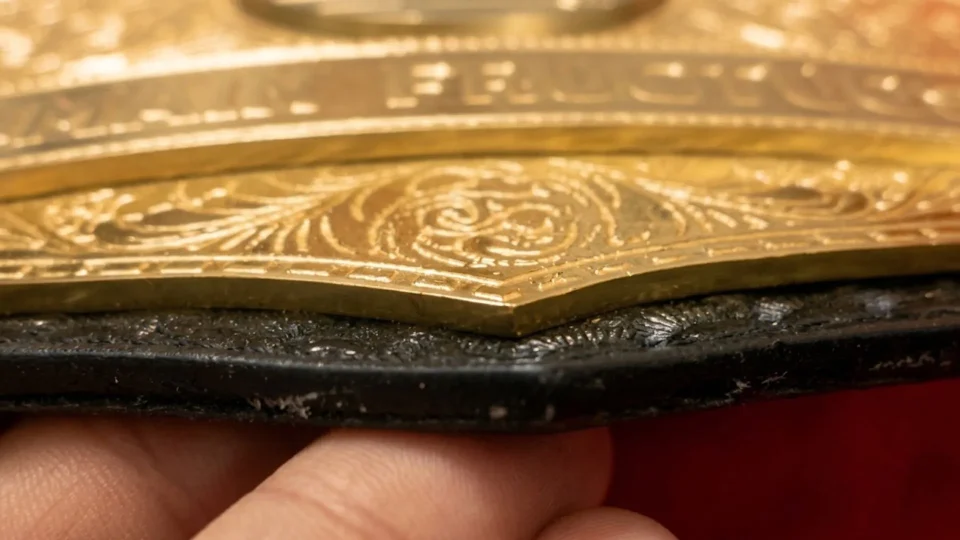
Thickness matters. A thicker plate resists a dent better than a thin one. Brass tends to bend, while zinc can crack if it takes a hard hit.
When Was the Big Gold Belt Retired?
WWE retired the Big Gold on August 18, 2014, on Raw. That night WWE gave Brock Lesnar a single new title belt, and the old design left active use after just over 28 years.
The change started with a merger of titles. WWE unified its two world titles on December 15, 2013, when Randy Orton beat John Cena. One champion meant one belt, and the Big Gold was the one that went away.
Retired here means the design stopped being defended on TV. It says nothing about the original Crumrine belt, which sits in private hands (see the ownership section above). The Wikipedia page on the belt has the full timeline.
How We Build a Big Gold Belt in Sialkot
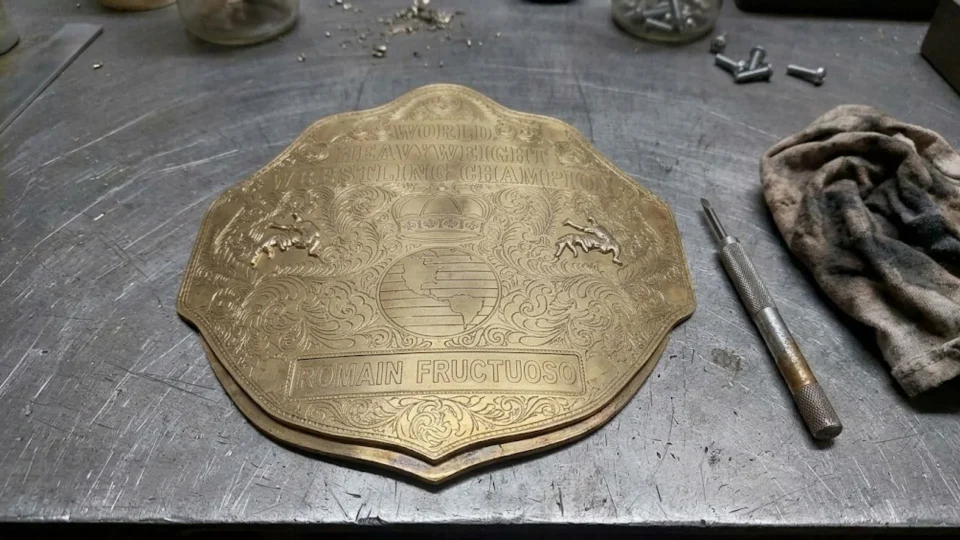
We make Big Gold belts in our workshop in Sialkot, Pakistan. We etch the design into the plates instead of casting it, and we follow the original closely. The original’s lettering was cut by hand, so no copy matches it exactly.
We offer three plate options:
| Plate material | Thickness | Price |
|---|---|---|
| Brass | 3 mm | $165 |
| Brass | 4 mm | $180 |
| Zinc | 4 mm | $195.70 |
Every plate gets artificial gold plating as standard. Real gold plating is available on request. A third-party plater does that work, so we can’t guarantee the result.
The stones are glass, set with glue. The strap is real or artificial leather, and we can make it up to 52 inches long. We also scale the belt up in size.
Custom orders take 10 to 15 working days. In-stock belts ship in 1 to 2 working days.
Want a Big Gold Style Belt Made in Our Workshop?
Browse our wrestling belts to see what we have in stock. For custom work, read how our custom order process runs from first message to shipping.
Our team confirms the material, price and deadline with you. We don’t advise on quantity or design, so bring a clear plan.
Big Gold Belt FAQ
Who owns the Big Gold Belt?
Conrad Thompson most likely owns the original, according to WhatCulture. He says he paid $60,000 for it. That is his own claim, and I found no independent record of the sale.
Where is the original Big Gold Belt?
It sits in private hands. I found no source that says where it is kept or displayed.
Who made the original Big Gold Belt?
Charles Crumrine, a silversmith in Reno, Nevada, made it in 1985. It debuted on February 14, 1986, at Battle of the Belts II.
Why was the Big Gold Belt dented at the top?
No source confirms the cause. Fans on forums offer several guesses, and I cover them in the dent section above.
When was the Big Gold Belt retired?
WWE retired it on August 18, 2014, on Raw. Brock Lesnar received a single new WWE title belt that night.
How much did the original Big Gold Belt cost?
Sources disagree. One belt maker’s history puts it at roughly $12,000 or more, while the common figure is $28,000. Crumrine reportedly quoted $25,000 or more to discourage copies.
About the author: Ibrahim Zaheer runs Ibrahim Sports, a championship belt workshop in Sialkot, Pakistan. The workshop has been making belts since 2002.